

For years, venture capital investors often viewed Nepal as an emerging market with significant potential but limited scalability. While early investments were generally cautious and focused on small pilot projects, today’s investment landscape is evolving. More venture capital firms are beginning to see Nepal not simply as a market for short-term experimentation but as a country capable of supporting sustainable innovation over many years.
This gradual shift reflects broader economic changes, improved digital infrastructure, a growing entrepreneurial ecosystem, and increasing confidence in Nepal’s long-term business environment.
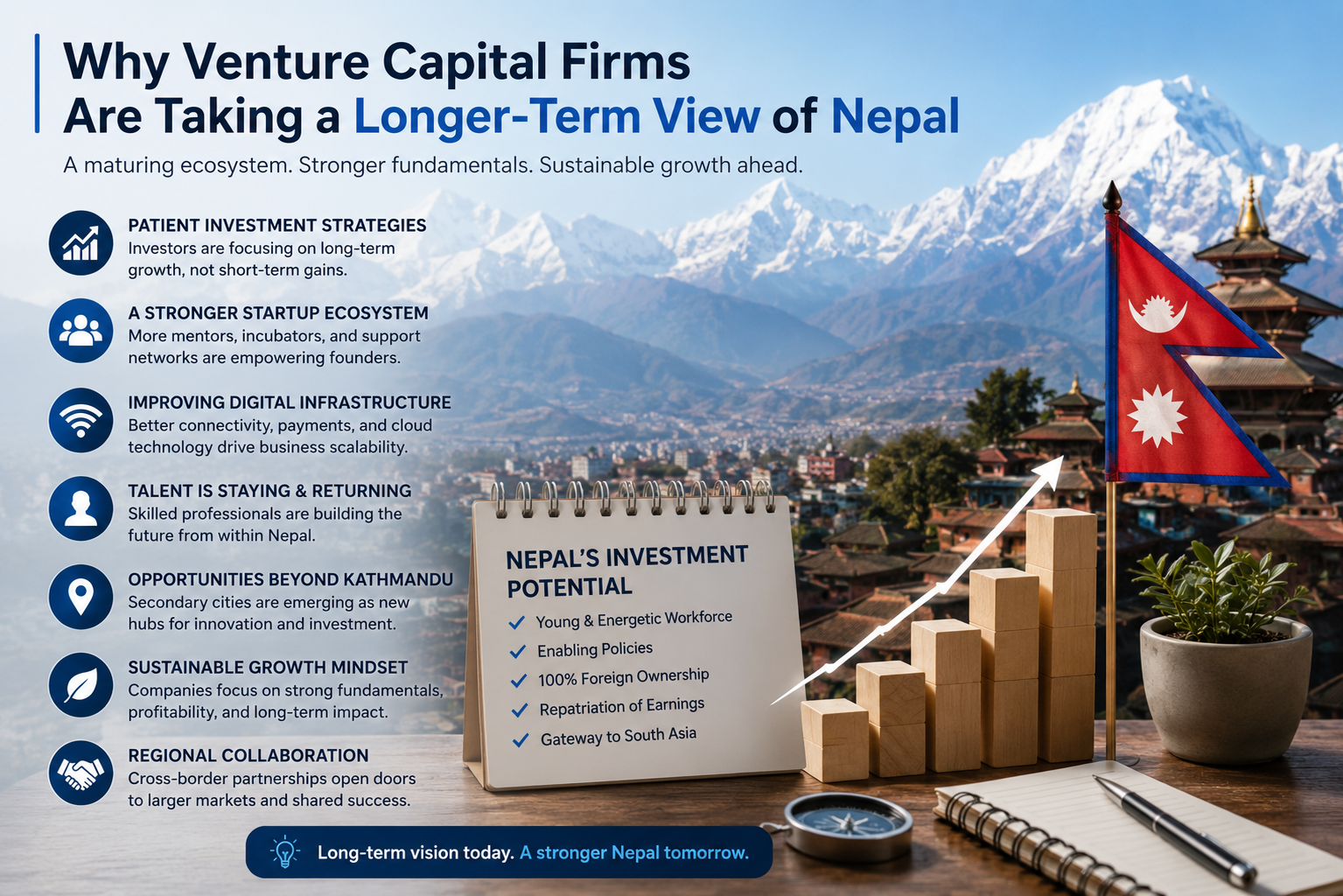
Investment Strategies Are Becoming More Patient
Traditional venture investing in developing economies frequently focused on achieving rapid growth or testing products before expanding into larger neighboring markets.
Today, investors are increasingly adopting longer investment horizons by supporting businesses through multiple stages of development rather than seeking immediate returns. This allows startups to build stronger products, improve operations, and establish stable customer relationships before pursuing aggressive expansion.
A More Experienced Startup Ecosystem
Nepal’s startup environment has matured considerably over the past decade.
Instead of isolated entrepreneurs working independently, founders now benefit from:
- experienced mentors;
- local incubators;
- university innovation programs;
- regional accelerator networks;
- growing investor communities.
This stronger ecosystem reduces many of the risks that previously discouraged long-term investment.
Digital Infrastructure Continues Improving
Reliable digital infrastructure plays a major role in investor confidence.
Better internet connectivity, expanding digital payment systems, cloud adoption, and growing smartphone usage allow startups to reach customers more efficiently while operating with lower costs than many traditional businesses.
For venture capital firms, these improvements create more predictable conditions for long-term growth.
Talent Retention Is Strengthening
One challenge for many developing economies has been retaining highly skilled professionals.
Nepal is beginning to see more entrepreneurs choosing to build companies locally instead of immediately relocating abroad. Many professionals who gained international education or work experience are returning with valuable knowledge, helping create stronger leadership within local businesses.
This growing talent pool gives investors greater confidence that companies can scale successfully over time.
Investors Are Looking Beyond Kathmandu
While Kathmandu remains Nepal’s primary business center, venture investors are increasingly exploring opportunities in secondary cities and regional innovation hubs.
Improved transportation networks and digital connectivity allow entrepreneurs across the country to access customers, partners, and investors without concentrating exclusively in one location. This geographic diversification creates a broader pipeline of investment opportunities.
Sustainable Growth Is Replacing Rapid Expansion
Modern venture investors increasingly prioritize healthy business fundamentals over explosive growth.
Rather than focusing solely on customer acquisition, investors now evaluate:
- operational efficiency;
- recurring revenue;
- governance practices;
- financial transparency;
- long-term profitability.
Companies that demonstrate steady, disciplined growth often become more attractive than businesses pursuing unsustainable expansion.
Collaboration Is Increasing Across the Region
Cross-border partnerships are becoming another important factor in Nepal’s investment appeal.
Local startups are building relationships with partners across South Asia while maintaining their operational base in Nepal. These regional connections provide access to larger customer markets without requiring companies to relocate entirely.
For venture capital firms, this combination of local stability and regional reach creates a more balanced investment profile.
Looking Ahead
Nepal’s investment story is gradually shifting from early-stage experimentation toward long-term value creation. Venture capital firms increasingly recognize that building successful companies requires patience, local knowledge, and sustained collaboration rather than short investment cycles.
As the country’s entrepreneurial ecosystem continues to mature, Nepal is becoming more than an emerging opportunity. It is steadily establishing itself as a market where long-term investment strategies can support meaningful innovation, resilient businesses, and sustainable economic growth for years to come.