

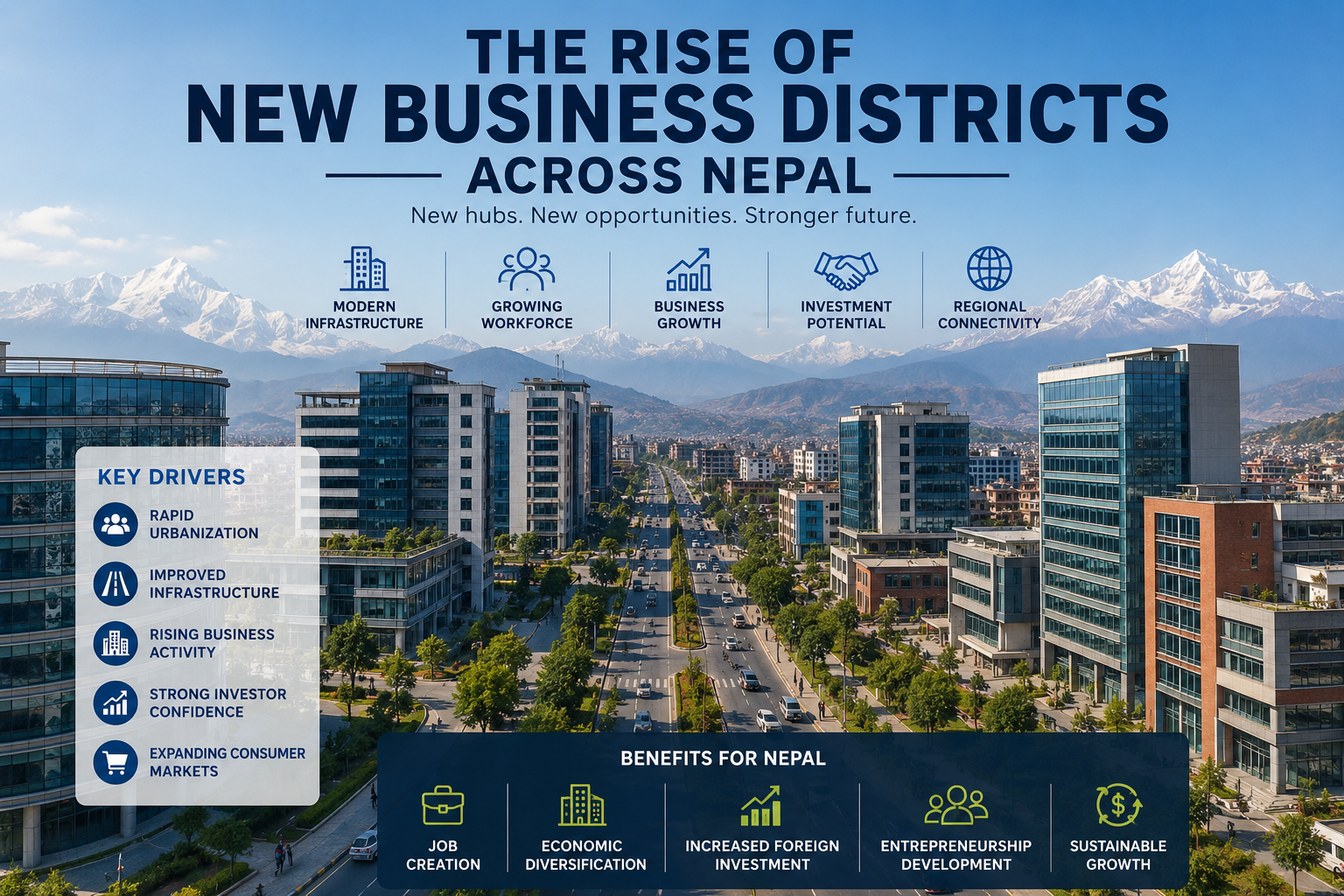
For many years, economic activity in Nepal was heavily concentrated in a limited number of urban centers. While Kathmandu remains the country’s primary commercial hub, a new trend is gradually transforming the investment landscape. Across Nepal, emerging business districts are creating fresh opportunities for entrepreneurs, developers, investors, and local businesses.
Driven by urban expansion, infrastructure improvements, population growth, and increasing private-sector activity, these developing commercial zones are becoming important engines of economic development. As businesses seek new markets and cities continue to evolve, the rise of modern business districts is reshaping how investment opportunities are distributed across the country.
Why Business Districts Matter for Economic Growth
Business districts play a critical role in modern economies. They create environments where companies, service providers, financial institutions, retailers, and professional organizations can operate efficiently within a concentrated area.
Well-developed business districts often generate:
- Employment opportunities
- Commercial real estate demand
- Infrastructure investment
- Consumer spending
- Business formation
- Regional economic growth
As Nepal continues urbanizing, the development of new commercial centers is becoming increasingly important for long-term economic expansion.
Urbanization Is Creating New Commercial Hubs
Nepal’s urban population has grown steadily over the past two decades. As cities expand, demand increases for:
| Urban Need | Economic Impact |
|---|---|
| Office space | Business growth |
| Retail centers | Consumer activity |
| Financial services | Capital circulation |
| Logistics facilities | Trade efficiency |
| Professional services | Job creation |
| Mixed-use developments | Investment opportunities |
This growth is encouraging the emergence of new business districts beyond traditional city centers. Developers and investors are increasingly recognizing the potential of strategically located commercial zones.
The Shift Beyond Traditional City Centers
Historically, many businesses preferred central urban locations. Today, several factors are changing this pattern:
- Rising land costs
- Traffic congestion
- Infrastructure expansion
- Growing suburban populations
- Improved transportation links
These changes are encouraging companies to establish operations in newer commercial areas that offer greater flexibility and growth potential. As a result, business activity is becoming more geographically diversified.
Commercial Real Estate Is Gaining Attention
The growth of business districts naturally increases demand for commercial real estate. Investors are paying closer attention to:
- Office developments
- Retail complexes
- Business parks
- Mixed-use properties
- Commercial land projects
These assets can benefit from increasing business activity and long-term urban development trends. As economic activity expands, demand for quality commercial space is expected to grow alongside it.
Infrastructure Development Supports Expansion
Business districts rarely emerge without supporting infrastructure. Recent investments in:
- Road networks
- Utility systems
- Telecommunications
- Transportation corridors
- Public services
are helping improve connectivity between residential and commercial areas. Better infrastructure makes emerging business zones more attractive to both investors and businesses seeking operational efficiency.
New Business Districts Encourage Entrepreneurship
One important benefit of expanding commercial hubs is the support they provide to entrepreneurs. New districts often create opportunities for:
- Startups
- Professional firms
- Technology companies
- Retail businesses
- Hospitality operators
- Service providers
Lower entry costs compared to established commercial centers can make these areas particularly appealing for growing businesses. Entrepreneurs frequently benefit from being early participants in developing markets.
Regional Economic Development Is Accelerating
The rise of business districts contributes to a more balanced economic landscape. Rather than concentrating growth in a few locations, emerging commercial zones help distribute opportunities across different regions.
Benefits may include:
| Regional Benefit | Outcome |
|---|---|
| Job creation | Higher local employment |
| Business activity | Increased investment |
| Property development | Economic expansion |
| Consumer services | Improved quality of life |
| Tax revenues | Public investment potential |
| Local entrepreneurship | Sustainable growth |
This diversification can strengthen long-term economic resilience.
Modern Businesses Are Seeking Flexible Locations
Many companies today prioritize flexibility when selecting business locations. Factors influencing decisions include:
- Accessibility
- Workforce availability
- Operating costs
- Infrastructure quality
- Expansion potential
Emerging business districts often provide attractive combinations of these factors. As businesses become more mobile and adaptable, new commercial hubs gain greater relevance.
International Investors Are Watching Urban Growth Trends
Global investors frequently monitor urban development patterns when evaluating emerging markets. The creation of business districts can signal:
- Economic confidence
- Rising demand
- Infrastructure improvements
- Private-sector expansion
- Long-term development potential
For investors seeking growth opportunities, expanding commercial zones often represent indicators of broader economic transformation. Nepal’s evolving urban landscape is increasingly attracting this type of attention.
The Future of Nepal’s Business Districts
Several trends are likely to influence future development:
- Continued urbanization
- Commercial real estate growth
- Infrastructure upgrades
- Private investment expansion
- Technology adoption
- Service-sector development
Future business districts may incorporate:
- Smart infrastructure
- Mixed-use developments
- Sustainable construction
- Modern office ecosystems
- Digital business services
These features could help support Nepal’s transition toward a more diversified and competitive economy.
Why Investors Should Pay Attention
Business districts often become focal points for economic activity long before their full potential is realized. Early investment can provide exposure to:
- Commercial property appreciation
- Business growth opportunities
- Expanding consumer markets
- Infrastructure-driven development
While every investment requires careful analysis, emerging business districts frequently represent important indicators of future economic momentum.
Final Thoughts
The rise of new business districts across Nepal reflects broader changes taking place throughout the country’s economy. Urban growth, infrastructure improvements, commercial development, and private-sector expansion are creating new centers of economic activity beyond traditional business locations.
As these commercial hubs continue to develop, they are generating opportunities for investors, entrepreneurs, developers, and local communities alike. Their growth highlights Nepal’s ongoing economic evolution and demonstrates how modern urban development can contribute to long-term national prosperity.