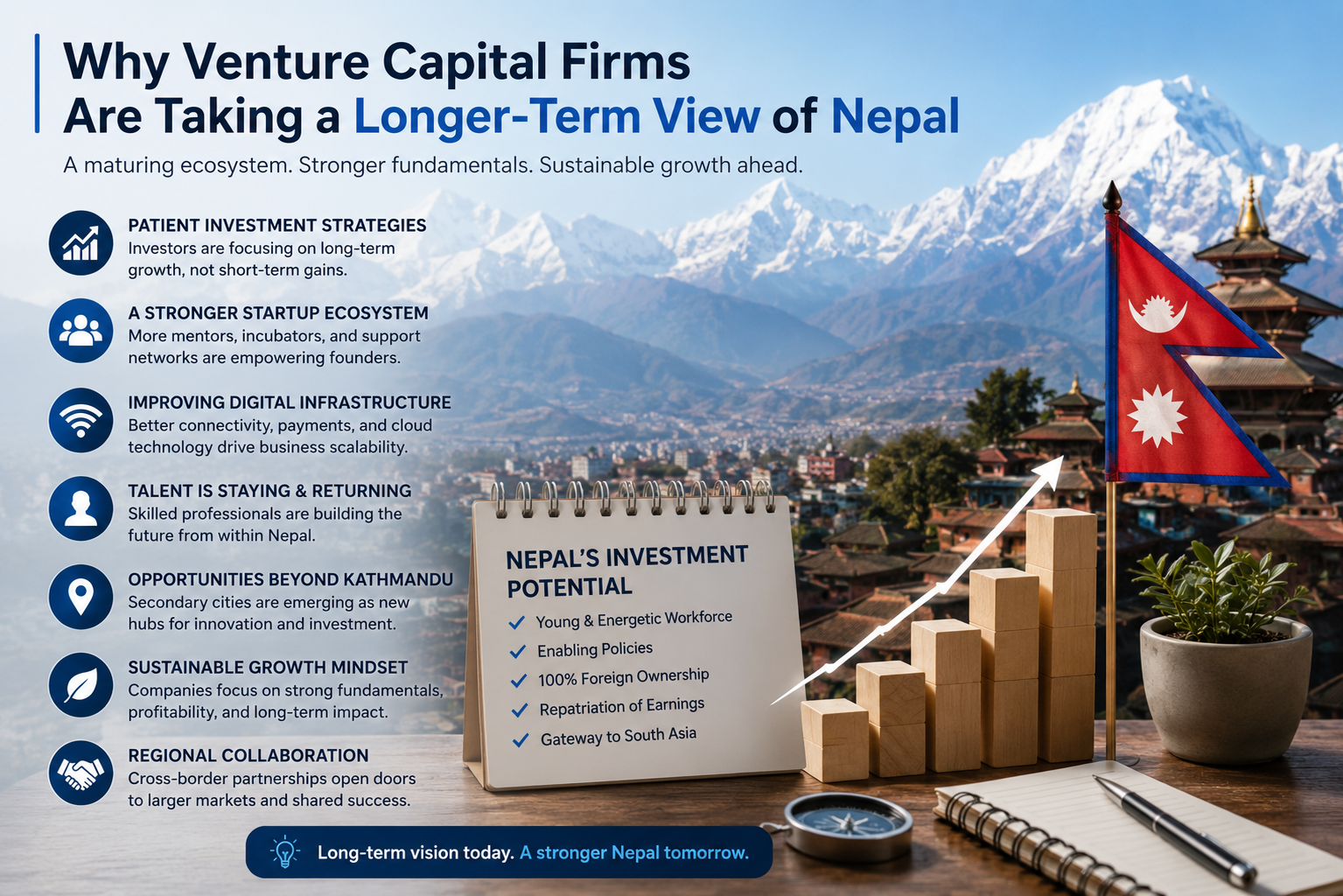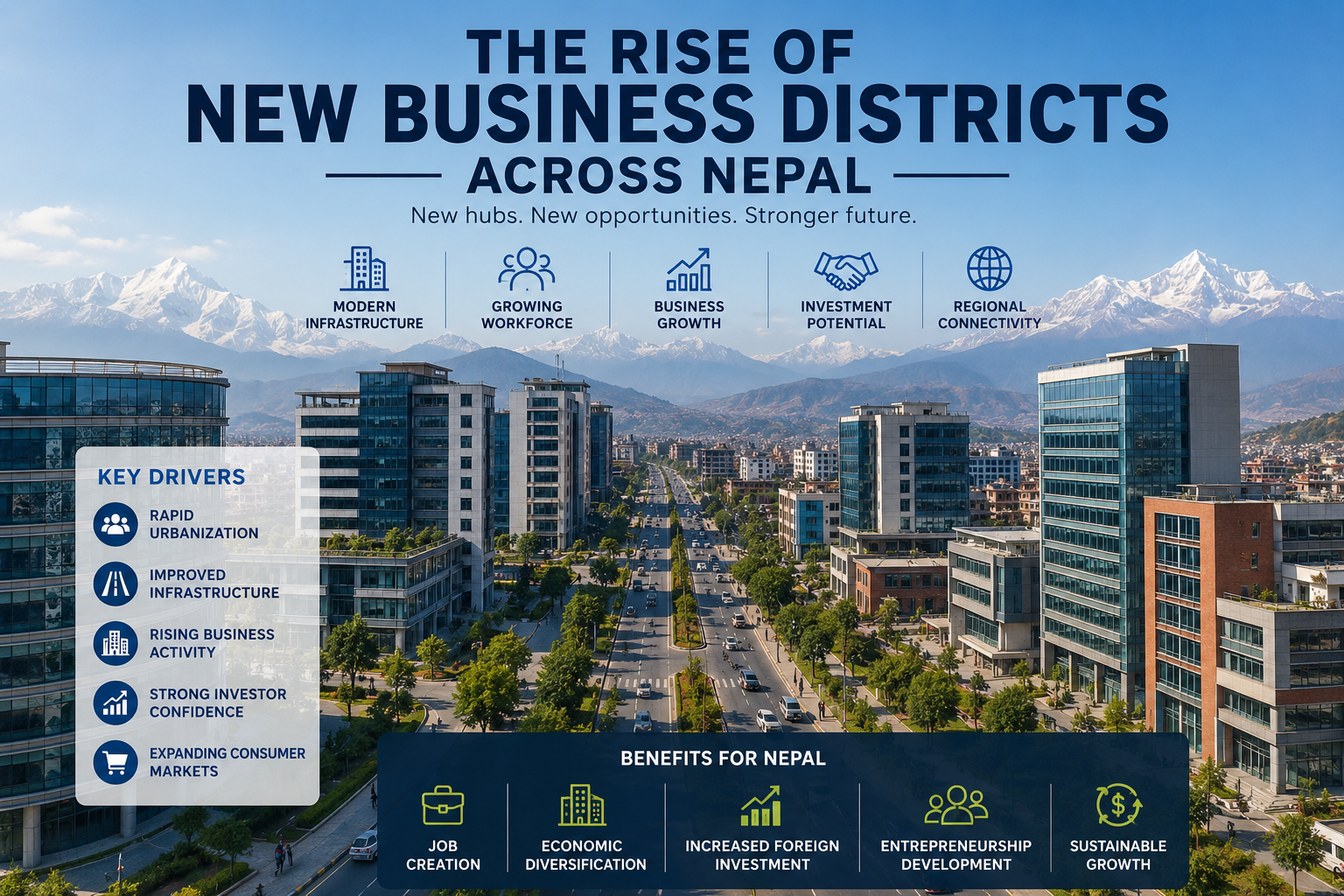



Nepal’s private capital industry is no longer an experiment whispered about in donor meetings and investor roundtables. It is now a visible part of the country’s financial architecture. What started with a handful of ambitious pioneers has become a regulated ecosystem, with licensed Specialised Investment Fund managers, growing institutional interest, and a new generation of entrepreneurs learning to speak the language of equity, governance and exits.
That progress deserves recognition. In a market as small, complex and relationship-driven as Nepal, the rise of private capital is not a minor achievement. It signals that business owners are beginning to see alternatives to bank debt, that regulators are creating space for new financial instruments, and that investors are willing to place long-term bets on companies that operate outside the public markets.
But the industry now faces a more difficult question than whether it can exist. It must ask what kind of market it wants to become.
Money Alone Will Not Build the Market
The answer matters because private capital is not just another source of money. At its best, it brings discipline, strategic guidance, better governance, professional reporting, and patient capital to businesses that are too ambitious for traditional lending but not yet ready for public markets. At its worst, it becomes a sophisticated game of timing, valuation theatre and regulatory arbitrage, where returns look impressive on paper while little durable value is created in the real economy.
Nepal has seen both possibilities.
The first wave of institutional capital came largely through Development Finance Institutions. These organisations played a crucial role. They entered a market that commercial investors considered too uncertain, too small or too immature. They brought not only funding but credibility. Their presence reassured founders, regulators and other investors that private capital could be a serious tool for economic development rather than a speculative side project.
Catalytic Capital Must Benefit More Than a Few Insiders
That early contribution should not be understated. Without DFI participation, Nepal’s private capital sector would almost certainly have developed more slowly. Yet catalytic capital carries a responsibility that goes beyond backing a few early winners. If the knowledge, networks and institutional advantages created by these first funds remain concentrated among a narrow circle of managers, the wider market does not truly mature. It merely produces incumbents.
The next generation of institutional investors must therefore think more carefully about market-building. Their capital should strengthen the ecosystem, not just individual balance sheets. It should encourage shared standards, better disclosure, founder education, stronger governance practices and a wider pool of credible fund managers. Otherwise, the promise of private capital will remain trapped inside a small club.
The “PE/VC” Label Is Creating False Expectations
There is also a language problem that has become a strategy problem. In Nepal, the phrase “PE/VC” is often used as if private equity and venture capital were interchangeable. They are not. Venture capital is built for high-risk, high-growth companies where many bets may fail and a few exceptional successes drive fund returns. Private equity, especially growth equity, is generally aimed at more established businesses with proven operations, clearer revenue models and a visible path to expansion.
Nepal is overwhelmingly a market of small and medium-sized enterprises. Most companies seeking capital are not Silicon Valley-style startups chasing explosive scale. Nor are they buyout targets supported by deep debt markets. They are real businesses trying to modernise operations, expand production, professionalise management, enter new markets or prepare for public listing.
That distinction is not academic. It determines how returns should be measured, how risk should be priced and how investors should behave. When fund managers present growth-equity investments as venture-style opportunities, they create distorted expectations. When investors benchmark Nepal against mature markets with deeper liquidity and larger exits, they misunderstand the terrain. A frontier SME market needs its own discipline, not borrowed vocabulary.
High IRR Does Not Always Mean Real Value Creation
The most uncomfortable issue, however, is the quality of reported returns. Some returns in Nepal’s private capital market have looked strong not because investors transformed businesses, but because they timed regulatory windows well.
The mechanism is simple. Under current rules, SEBON-licensed Specialised Investment Funds must hold shares for a defined period after a portfolio company goes public. In principle, this lock-in period can protect market integrity. If an investor supported a company early, helped it grow and then stayed invested through the IPO process, such a requirement is understandable.
But the same rule can produce very different outcomes when capital enters late, just before a company is already on the path to listing. In that case, the investor is not necessarily building value. It may simply be buying into a near-certain liquidity event at a favourable price, waiting through the lock-in period, and then reporting a handsome internal rate of return. The business may not have become stronger. Governance may not have improved. Productivity may not have risen. Yet the fund’s performance can appear exceptional.
Retail Investors Should Not Pay the Price for Sophisticated Arbitrage
This is where the industry must be honest with itself. Not every legal return is a meaningful return. Not every profitable exit proves investment skill. And not every high IRR represents value creation.
The cost of this dynamic often falls on public-market investors. Retail participants in Nepal’s stock market do not always have full visibility into how institutional investors entered a company, what price they paid, how close the business already was to listing, and when those investors may eventually exit. When information is uneven, sophisticated capital enjoys advantages that ordinary investors cannot easily evaluate.
Regulators should take that asymmetry seriously. Public trust is the foundation of any capital market. If retail investors begin to believe that private funds are using the IPO pipeline as an extraction mechanism, confidence will suffer. SEBON and other market institutions must ensure that disclosure rules, lock-in provisions and ownership transparency evolve with the sophistication of the industry.
Fund managers, too, should not hide behind technical compliance. Reputation in private capital compounds slowly and can vanish quickly. A manager who builds returns through regulatory loopholes may win a fund cycle but lose the confidence of founders, investors and the public market over time.
Too Much Capital Can Become a Problem in a Small Market
Another risk is less dramatic but equally dangerous: too much money chasing too few suitable deals. Most private capital funds operate under fixed timelines. Capital must be deployed within a certain period, and investors expect exits within the life of the fund. In a small economy, that structure can create pressure to invest even when the opportunity set is thin.
The consequences are familiar. Funds may overpay for companies. They may back businesses that are not institutionally ready. They may stretch their mandate from one sector to another in search of deployable deals. A fund that claims expertise in renewable energy one year, technology the next and infrastructure after that should invite scrutiny. Flexibility can be useful; strategic drift is not the same thing.
In frontier markets, discipline matters more, not less. A clear thesis, careful staging of capital and realistic exit planning are essential. Investors must understand that Nepal cannot absorb capital at the pace or scale of larger markets. Patience is not a public-relations slogan here. It is a survival requirement.
A Smarter Generation of Fund Managers Is Emerging
There are encouraging signs. The newer generation of fund managers appears more thoughtful. Some are developing sharper sector focus. Others are paying closer attention to the difference between early-stage risk, expansion capital and pre-IPO financing. Founders are also becoming more selective. They have learned that the highest valuation is not always the best deal, especially when it brings unrealistic growth expectations, governance friction or painful dilution later.
Entrepreneurs in technology and digital services are asking better questions. They want to know what investors can actually provide beyond money. Can they open regional networks? Can they help recruit leadership? Can they support product strategy, compliance, partnerships or overseas expansion? If the answer is weak, many founders would rather bootstrap, borrow locally, or look outside Nepal for investors with deeper operational value.
That is not a rejection of Nepal’s private capital market. It is a message to it.
Nepal Needs a Market Built for Its Own Reality
The market is real. The opportunity is real. Nepal has companies that can grow, professionalise and deliver meaningful returns. But the industry must stop pretending that imported fund models, inflated labels and clever regulatory timing are enough. They are not.
Private capital in Nepal must be built around the country as it actually is: a frontier economy dominated by SMEs, constrained by liquidity, rich in entrepreneurial energy, and still developing the institutions that support long-term investment. The winners will be those who understand the limits of the market without underestimating its potential.
The Second Chapter Must Be Written With Integrity
The first chapter proved that private capital can take root in Nepal. The second chapter will decide whether it becomes a tool for genuine business transformation or merely another financial shortcut. That choice now belongs to fund managers, investors, regulators and founders alike.
Growth has arrived. Integrity must follow.