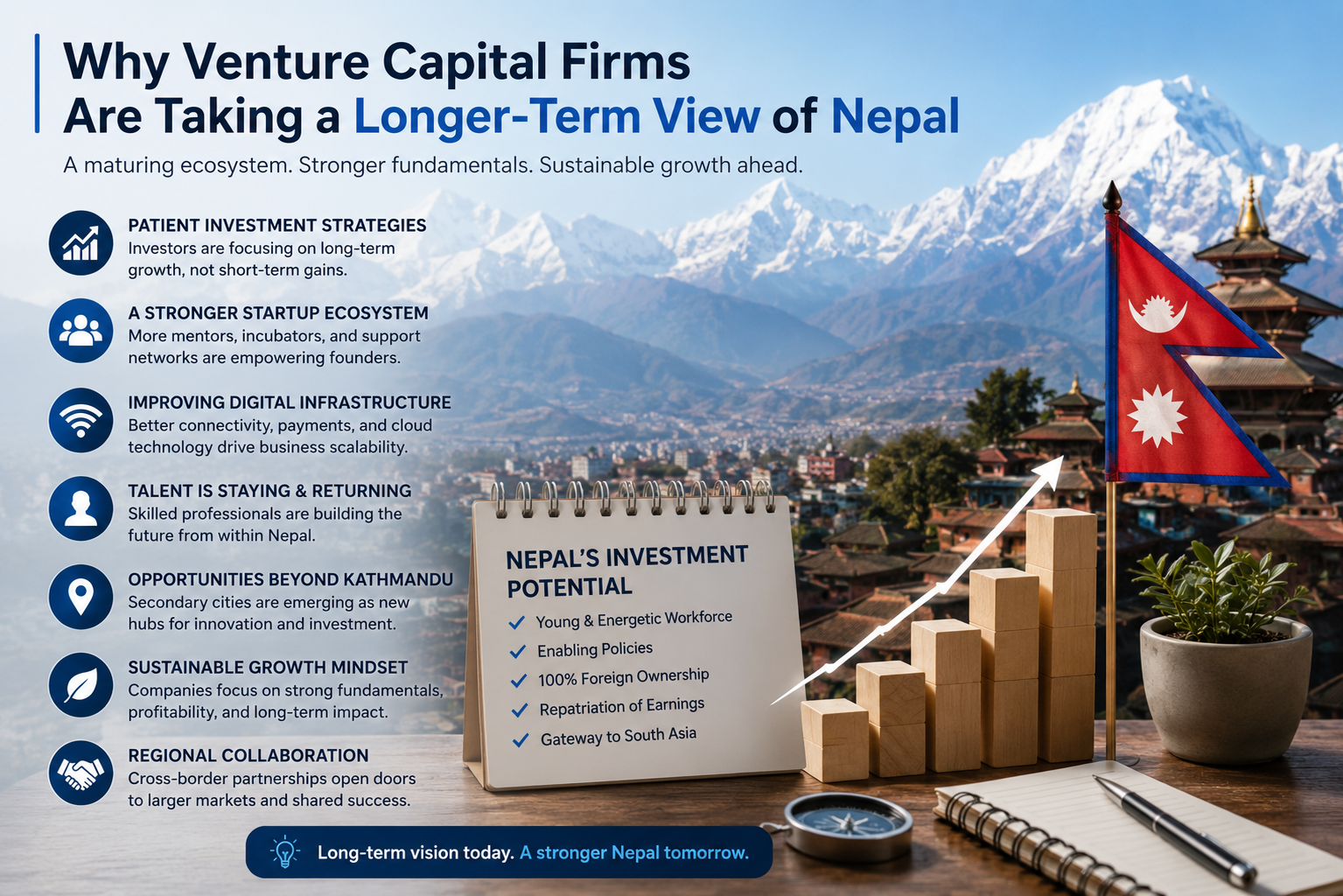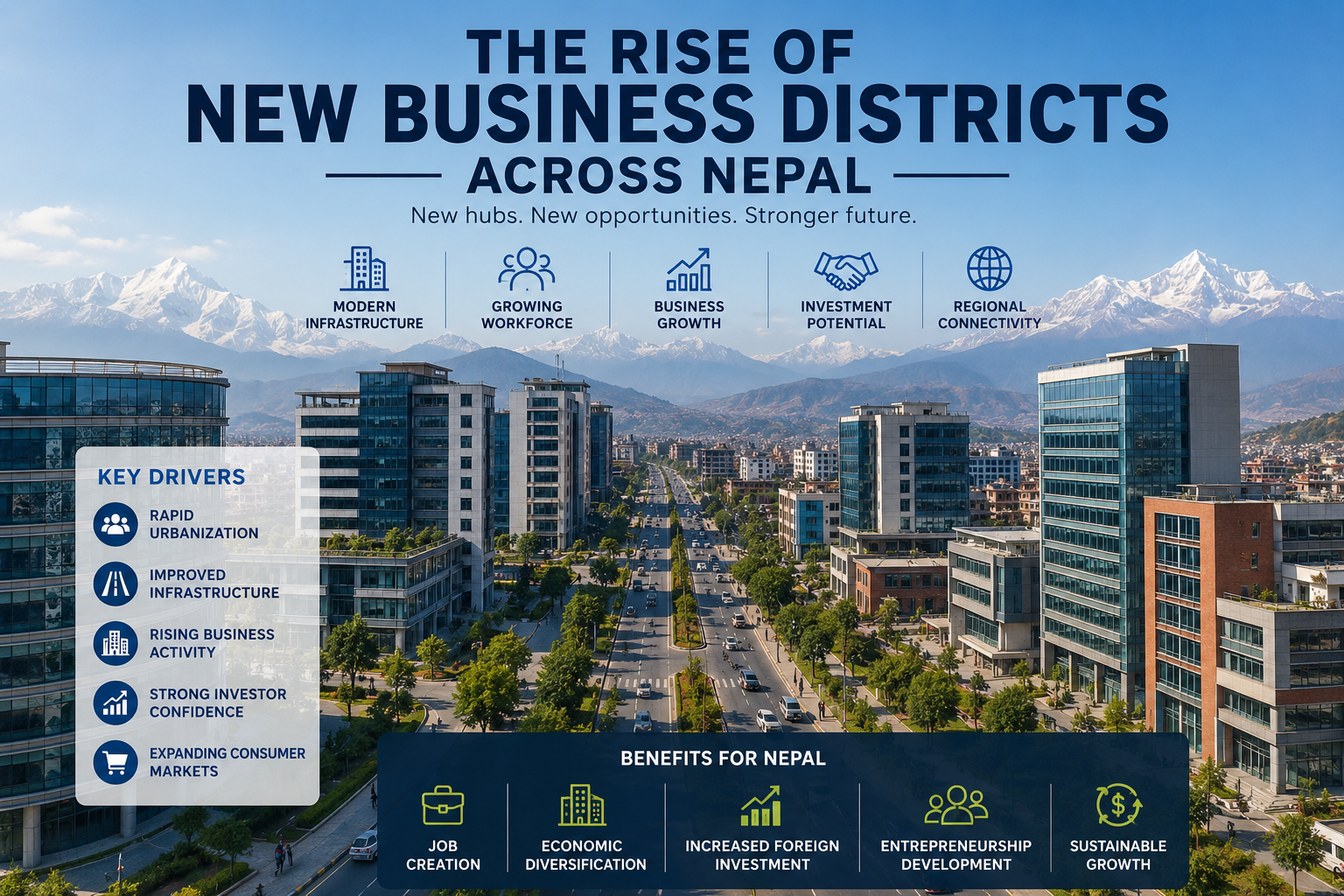


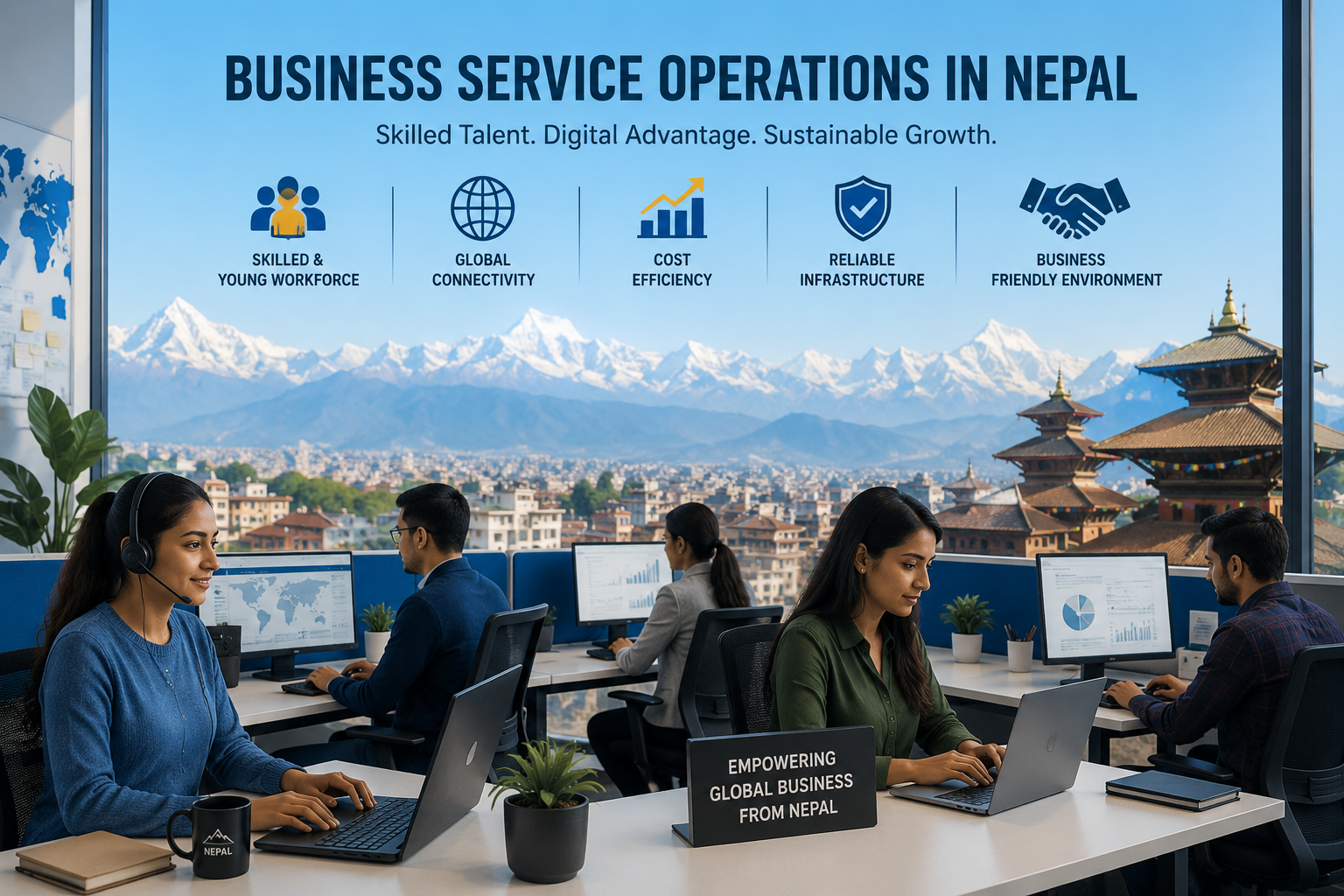
When investors discuss Nepal, conversations often focus on manufacturing, tourism, hydropower, or infrastructure. Yet another sector has been quietly building momentum over the past few years: business service operations.
International companies are increasingly exploring Nepal as a location for customer support, back-office services, finance operations, software development, design, and other knowledge-based functions. Improvements in digital connectivity, a growing pool of educated professionals, and competitive operating costs have made Nepal a compelling option for businesses looking to diversify their regional footprint.
Rather than replacing established outsourcing destinations, Nepal is carving out its own position by offering flexibility, skilled talent, and an environment that supports gradual, sustainable expansion.
A Growing Knowledge Economy
Nepal’s economy is becoming increasingly diverse. Universities continue producing graduates in fields such as:
- information technology;
- accounting;
- finance;
- engineering;
- business management;
- digital marketing.
Many young professionals also possess strong English communication skills and familiarity with international business practices, making them well suited for global service industries. This expanding talent base gives international employers greater confidence when establishing operational teams.
Why Service Operations Are Expanding
Business service operations include a wide variety of activities that support companies without directly producing physical products.
Common examples include:
- customer service;
- finance and bookkeeping;
- payroll administration;
- software development;
- IT support;
- digital content management;
- research;
- human resources;
- compliance support.
These functions rely primarily on skilled employees rather than expensive industrial infrastructure. That makes Nepal particularly attractive for organisations seeking efficient long-term growth.
Competitive Operating Costs
Cost efficiency remains an important consideration for international businesses. Compared with many larger regional markets, Nepal offers competitive operating expenses across several areas:
| Business Cost | Competitive Advantage |
|---|---|
| Office space | Lower rental costs |
| Professional salaries | Competitive regional levels |
| Administrative expenses | Cost-efficient operations |
| Business expansion | Lower initial investment |
| Talent recruitment | Growing graduate workforce |
Lower operating costs allow companies to invest more resources into employee development, technology, and long-term business growth.
Digital Infrastructure Continues Improving
Reliable connectivity is essential for modern service businesses. Nepal has invested steadily in expanding:
- broadband coverage;
- fiber-optic networks;
- cloud connectivity;
- mobile internet;
- digital payment systems;
- enterprise technology adoption.
These improvements support businesses that depend on constant communication with international clients. For customer support centres, software companies, and consulting firms, dependable digital infrastructure is just as important as physical office space.
Flexible Business Scaling
One advantage of service operations is scalability. Companies rarely need hundreds of employees from day one. Instead, they can begin with relatively small teams before gradually expanding as demand increases. This approach reduces financial risk while allowing businesses to better understand local market conditions. Many investors see Nepal as an environment where sustainable growth can occur without excessive upfront costs.
A Strong Focus on Professional Development
Employers increasingly recognise the value of investing in people. International firms operating in Nepal often provide:
- technical certifications;
- leadership training;
- language development;
- project management education;
- cybersecurity programs;
- customer experience workshops.
Continuous learning benefits both employees and employers by creating more capable and adaptable teams.
Time Zone Advantages
Nepal’s location also creates practical advantages. Companies serving clients across Asia, Europe, Australia, and parts of the Middle East can often build support schedules that overlap efficiently with international business hours. This flexibility makes Nepal suitable for businesses requiring extended customer support or globally distributed operations.
More Than Traditional Outsourcing
Modern business service centres are evolving far beyond simple call centres. Today’s operations increasingly include:
- data analysis;
- financial reporting;
- legal documentation;
- software engineering;
- UI and UX design;
- artificial intelligence support;
- digital transformation consulting.
As employee skills continue developing, Nepal is well positioned to participate in these higher-value service segments.
Government Support for Digital Growth
Digital transformation has become an important component of Nepal’s broader economic development strategy. Continued investment in technology education, entrepreneurship, and digital infrastructure is helping create conditions that support knowledge-intensive industries. For international investors, these developments provide additional confidence that the business environment will continue evolving alongside global demand.
Diversification Is Becoming a Strategic Priority
Many multinational companies are reviewing how they distribute operations across different countries. Rather than concentrating every function in one location, businesses increasingly spread teams across multiple markets to improve resilience and reduce operational risk. Nepal offers an attractive complementary destination within this broader diversification strategy. Companies benefit from geographic flexibility while accessing a growing pool of capable professionals.
Looking Ahead
Business service operations are likely to become an increasingly important contributor to Nepal’s economy. As digital technologies continue reshaping global business, demand for skilled professionals in finance, technology, customer experience, analytics, and administrative services will continue expanding.
Nepal’s combination of competitive costs, educated talent, improving infrastructure, and business-friendly growth creates strong foundations for continued investment in this sector.
Final Thoughts
International companies are discovering that Nepal offers far more than traditional investment opportunities. Its growing knowledge economy, expanding digital infrastructure, and increasingly skilled workforce are positioning the country as an attractive destination for modern business service operations.
As organisations continue diversifying their global operations, Nepal is steadily emerging as a practical choice for companies seeking long-term growth, operational flexibility, and access to capable professionals in an increasingly digital economy.