

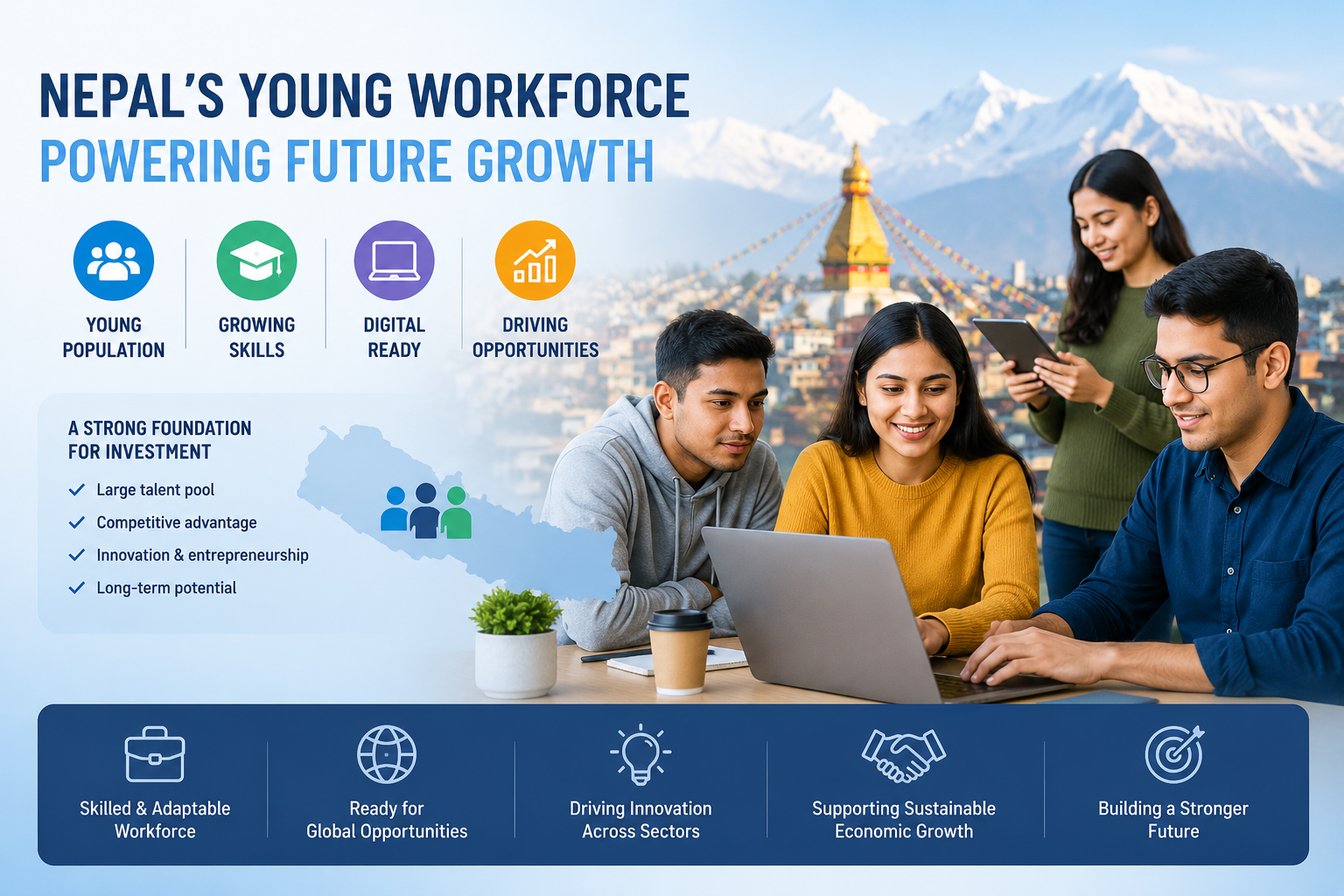
As global investors search for emerging markets with long-term growth potential, workforce demographics are becoming an increasingly important factor. While infrastructure, regulations, and market access remain critical considerations, the availability of a young and adaptable workforce is often what determines whether an economy can sustain growth over time.
In Nepal, demographic trends are creating a significant advantage. A large share of the population is under the age of 35, providing businesses with access to a growing labor pool at a time when many countries are facing aging populations and labor shortages. This demographic strength is becoming an important part of Nepal’s investment story.
Why Demographics Matter to Investors
Investors evaluate more than financial performance when entering a new market. Long-term workforce availability can influence productivity, business expansion, and operational costs.
Several demographic factors often attract investor attention:
| Workforce Factor | Why It Matters |
|---|---|
| Young population | Supports long-term labor supply |
| Growing workforce | Expands economic activity |
| Skills development | Increases productivity |
| Urbanization | Creates business opportunities |
| Digital adoption | Supports modern industries |
Countries with favorable demographics often have more flexibility to support economic growth over extended periods.
Nepal’s Workforce Profile
Nepal has one of the youngest populations in South Asia. This creates opportunities across industries that require a steady supply of workers, entrepreneurs, and skilled professionals.
Key characteristics include:
- Large working-age population.
- Increasing educational participation.
- Growing digital literacy.
- Expanding urban employment markets.
- Rising interest in entrepreneurship.
These factors contribute to a workforce that can adapt to changing business needs while supporting economic development.
Education and Skills Are Improving
The quality of a workforce depends not only on age but also on skills. Over the past decade, Nepal has seen improvements in education access and professional training opportunities. Universities, technical institutions, and private training providers continue expanding programs that support workforce development.
Areas receiving increased attention include:
| Sector | Skills Demand |
|---|---|
| Information technology | Software and digital skills |
| Financial services | Business and finance expertise |
| Manufacturing | Technical capabilities |
| Tourism | Hospitality management |
| Renewable energy | Engineering and operations |
As these sectors grow, workforce capabilities are expected to strengthen further.
Why Businesses Are Paying Attention
Companies evaluating international expansion often consider labor availability alongside operational costs. Nepal offers several workforce-related advantages:
- Competitive labor costs.
- Growing talent pools.
- Strong entrepreneurial culture.
- Increasing digital adoption.
- Expanding professional services sector.
These characteristics can help businesses scale operations while maintaining flexibility in a competitive environment.
The Role of Digital Transformation
Digital technologies are changing employment opportunities across Nepal. Remote work, online education, digital services, and technology-driven industries are creating new pathways for workforce participation. This shift allows businesses to access talent beyond traditional economic centers.
Some growing areas include:
| Digital Trend | Workforce Impact |
|---|---|
| Remote work | Broader employment access |
| Online learning | Faster skill development |
| Digital finance | New professional opportunities |
| E-commerce | Business creation potential |
| Technology services | Export-oriented growth |
These developments help connect Nepal’s workforce to global economic opportunities.
Challenges Still Need Attention
Despite positive demographic trends, challenges remain. Investors continue to monitor issues such as:
- Skills alignment.
- Workforce retention.
- Infrastructure development.
- Productivity improvements.
- Industry-specific training.
Addressing these areas will help maximize the long-term value of Nepal’s demographic advantage.
Why Workforce Strength Could Shape Nepal’s Future
Many countries are experiencing aging populations that reduce workforce growth. Nepal’s younger demographic profile places it in a different position.
For investors with a long-term perspective, workforce availability can become a strategic advantage that supports business expansion, innovation, and economic resilience.
As education levels improve and digital industries continue growing, Nepal’s workforce may become one of the country’s most important economic assets.
Conclusion
Nepal’s young workforce is emerging as a significant investment advantage. A growing working-age population, improving education levels, expanding digital skills, and increasing entrepreneurial activity are creating conditions that attract investor interest across multiple sectors.
While challenges remain, demographic strength provides Nepal with an important foundation for future economic growth and long-term investment opportunities.